Step 1 of 5Observe
Collect and validate measurements.
Check incoming measurements for units, timing, gaps and plausibility, helping engineers distinguish data quality concerns from changes in machine behaviour.
industrial Heating and cooling systems intelligence
See beyond the readings.
Understand the system behind them.
Meet ARG-BLC1. Thermodynamic intelligent Brain, explainable analysis and measurable forecasting—built around the engineer.
Discover the engineStep 1 of 5Observe
Check incoming measurements for units, timing, gaps and plausibility, helping engineers distinguish data quality concerns from changes in machine behaviour.
Step 2 of 5Interpret
Compare valid readings with a reviewed thermodynamic reference to highlight unusual behaviour. A lower COP does not automatically mean a failed component.
Step 3 of 5Predict
Use past measurements to estimate near-term operating conditions, supporting engineering decisions without turning predictions into equipment commands or confirmed faults.
Step 4 of 5Verify
Compare predictions with later measurements and a simple baseline. Keep errors, missing coverage and regressions visible before accepting an improvement.
Step 5 of 5Review
Use reviewed outcomes and research to propose improvements. Test candidates, retain previous versions and require authorised approval before changing the active model.
Security layerControl
Keep insight separate from equipment control. Defined roles and customer boundaries restrict private access; this public website has no connection to customer equipment.
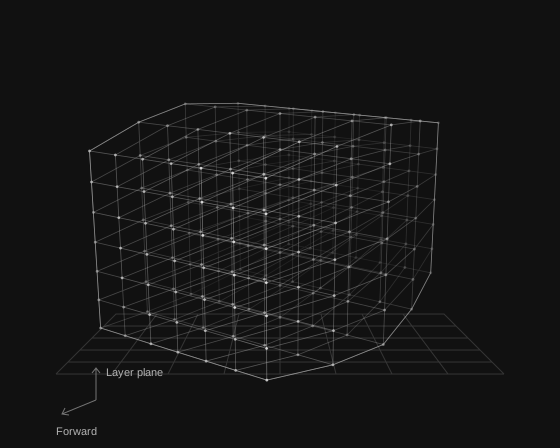
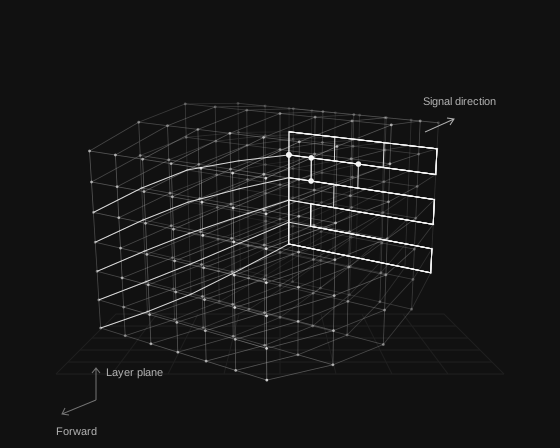
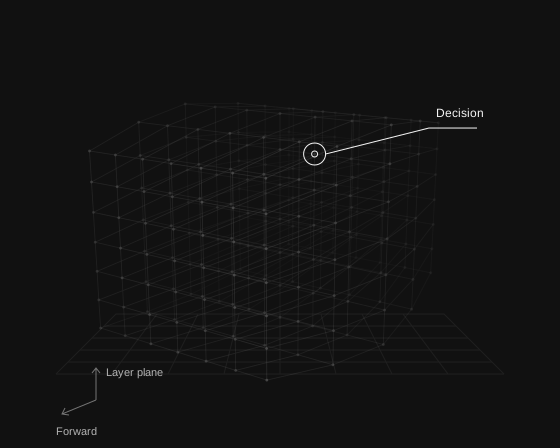
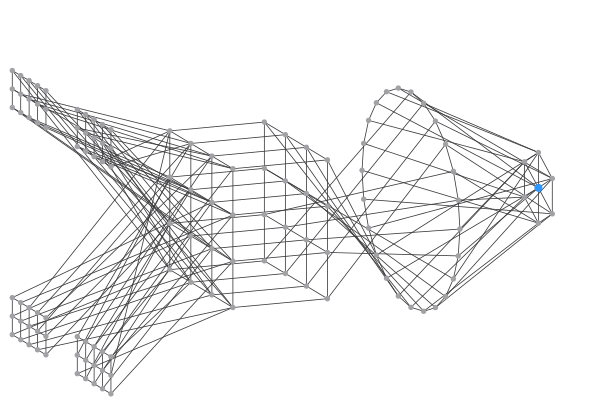
Architecture-informed visualization. Representative shapes illustrate engineering components, rather than a literal neural-network topology.
Drag to rotate. Scroll or pinch to zoom. Space pauses; arrow keys change stages.
Explore the cooling programme and the proposed heating programme.
Cooling systems
Engineering pilotThermodynamic insight for industrial chillers, combining explainable investigation with forecasts evaluated against measured outcomes.
Explore ARG-BLC1 Try the cooling demoHeating systems
Under developmentPlanned intelligence for industrial heaters, boilers and heat pumps, with analysis shaped around each equipment type.
Explore HET-B1 Try the heating demoIndustrial chillers communicate their operating performance through a continuous stream of data—temperature, pressure, flow, and power. ARG-BLC1 transforms these signals into meaningful engineering insights, enabling a deeper understanding of system behaviour and performance.
PROJECT CASSANDRA integrates engineering expertise with advanced machine intelligence within a structured, data-driven framework. By correlating operational measurements, identifying evolving performance patterns, and validating predictive models against real-world outcomes, it establishes a rigorous and intelligent approach to system analysis, performance optimisation, and predictive decision-making.
Context before conclusions.
Signals you can investigate.
Progress you can review.
Explore four connected capabilities.
One evidence-led approach.
ARG-BLC1 capability overview
Hover, focus or select a capability to explore its engineering value.
Reliable engineering insight starts with measurements that can be understood and trusted.
Data quality is considered alongside operating context, so incomplete evidence is distinguished from a supported conclusion.
An assessment depends on the quality and suitability of the available measurements.
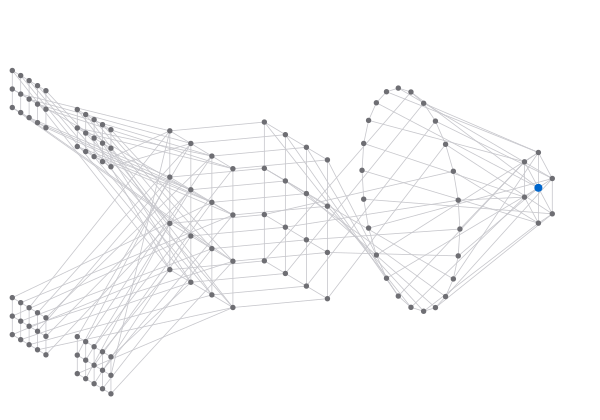
Illustrative capability overview, not the internal system architecture or live model activity. Proprietary models and implementation details are not published on this site.
Physics informed / Quality aware
Bring temperatures, pressures, flow and electrical input into a reviewed thermodynamic context. Investigate departures from an operating reference with the conditions of the machine in view.
Explainable / Investigative
Explore patterns across heat exchangers, compressors, refrigerant behaviour and sensors. Supporting measurements and alternative explanations help engineers investigate an anomaly without presenting a hypothesis as a confirmed failure.
Predict / Measure / Compare
Evaluate operating and efficiency forecasts against later observations. R², RMSE and data coverage make completed results understandable without promising a fixed level of accuracy.
Research / Validation / Approval
Review public research and evidence-backed proposals. Test candidate changes in isolation, compare the results and preserve recovery options. Human approval remains part of the path from a proposed improvement to a released change.
Intelligence should make engineering decisions more understandable—not harder to question.
A conceptual neural network of connected nodes arranged in five spatial layers. This is an illustration, not internal model topology or plant measurements.
Conceptual illustration. Select a principle to explore the view.
Five connected stages.
Evidence retained throughout.
Check units, timestamps, completeness and physical plausibility before drawing conclusions.
Place valid signals in the context of equipment, load and a reviewed operating reference.
Generate versioned forecasts using information available before the prediction period.
Compare predictions with later measurements. Keep gaps, errors and weak results visible.
Explain proposed improvements, assess the evidence and require approval for a released change.
Control is part of the architecture
A proposal is a reason to review.
Never permission to release.
ARG-BLC1 is developed around controlled access, reviewed improvements and human oversight. Its public security overview describes these principles without publishing operational details.
Read the control boundariesPrivate engineering functions are intended for authorised users with appropriate permissions.
This public presentation provides no access to private engineering systems.
Proposed improvements require an explanation, supporting evidence and human approval before an authorised release.
A proposal is not permission to change production software or equipment.
Candidate improvements are evaluated separately before a release decision, with reliability and existing behaviour considered.
Passing software checks does not establish safe field operation.
Review records support an understanding of what was proposed, what evidence was considered and why a decision was made.
Operational assurance also depends on deployment-specific processes and independent review.
Prior working versions remain available to support reviewed recovery when a change is not suitable.
Operational recovery arrangements require equipment- and deployment-specific verification.
Public assurance context
Five reference layers
No operational topology
This website presents Project Cassandra and ARG-BLC1. It provides no access to the private engineering engine and no connection to customer equipment.
The public interface can be inspected as a website. Private engineering functions and customer deployments sit outside this presentation.
This boundary describes the public website. It does not establish the security of a private engine or a customer installation.
These are qualitative public reference layers, not a score, a certification or a guarantee. Deployment controls and operational readiness require separate evidence and verification.
This is a public overview of security principles, not a security certification. Deployment assurance and operational acceptance require separate verification.
Clear boundaries are part of the engineering.
ARG-BLC1 is an engineering pilot and decision-support platform. Equipment-specific commissioning, good measurements and independent validation determine what it can responsibly conclude.
Understand the evaluation requirementsReviewed equipment profiles and measurement definitions come before machine-specific conclusions. Compatibility is assessed per installation.
No guaranteed accuracy or invented future scores. Missing observations and unverified findings stay visible.
Proposals explain what changes and why. Validation and approval precede release, with previous versions retained for recovery.
Anomaly signals guide investigation. They are not confirmed component failures, equipment commands or a replacement for safety protection.
A closer look
It connects quality-checked chiller measurements with engineering context, explainable anomaly investigation and evaluated forecasts. Its learning and improvement workflows preserve evidence and human review.
No. It supports investigation and can prepare improvement candidates. Anomaly indicators do not repair a component, and a proposed code or model change is not an automatic production update.
Not without equipment-specific work. A suitable profile, verified measurement definitions, operating reference and commissioning review are required. The broader architecture is intended for extension; compatibility is not assumed.
After the forecast period ends and enough matching measurements arrive. R² and RMSE describe that completed evaluation. Future-week scores cannot be known in advance, and no fixed accuracy target is guaranteed.
Project Cassandra / ARG-BLC1
Explore the engineering value, capabilities and requirements for a responsible pilot evaluation.
Read the technical briefCassandra is in engineering preview. The ChatGPT directory release is pending review.
The guest service demonstrates three fixed synthetic calculations. Private account tools provide energy accounting and experimental performance references. Chiller diagnostics cover a reviewed equipment profile. The HET-B1 heater diagnostic programme is under development.
This website presents the project. It accepts no plant-data uploads and provides no equipment control.
Contact Cassandra about a pilot or the preview